Verified U.S. consular operations reference documentation and official travel advisory data.
Incident Overview & Travel Advisory
Travelers undergoing active passport adjudication or scheduling renewal filings should verify state department guidelines before submitting documentation.
Impact on Routine & Expedited Processing
When processing delays surge, regional centers re-allocate workloads across federal locator hubs. Check your 2-digit locator prefix to determine whether your application has been transferred.
Have a 9-Digit Passport Application Locator Number?
Decode which of the 29 federal passport centers is adjudicating your file and access direct agency phone numbers.
▸ Will this alert delay existing applications in process?
Existing applications already cleared into the national system follow established adjudication timelines, though mail intake at lockbox facilities may experience brief bottlenecks.
Consular Operations Editorial Standard: This intelligence briefing is reviewed by regulatory researchers and updated daily to match statutory provisions in Title 22 of the Code of Federal Regulations (CFR) and U.S. State Department consular guidelines.
4. Supply Chain Architecture: The Next Generation Passport (NGP)
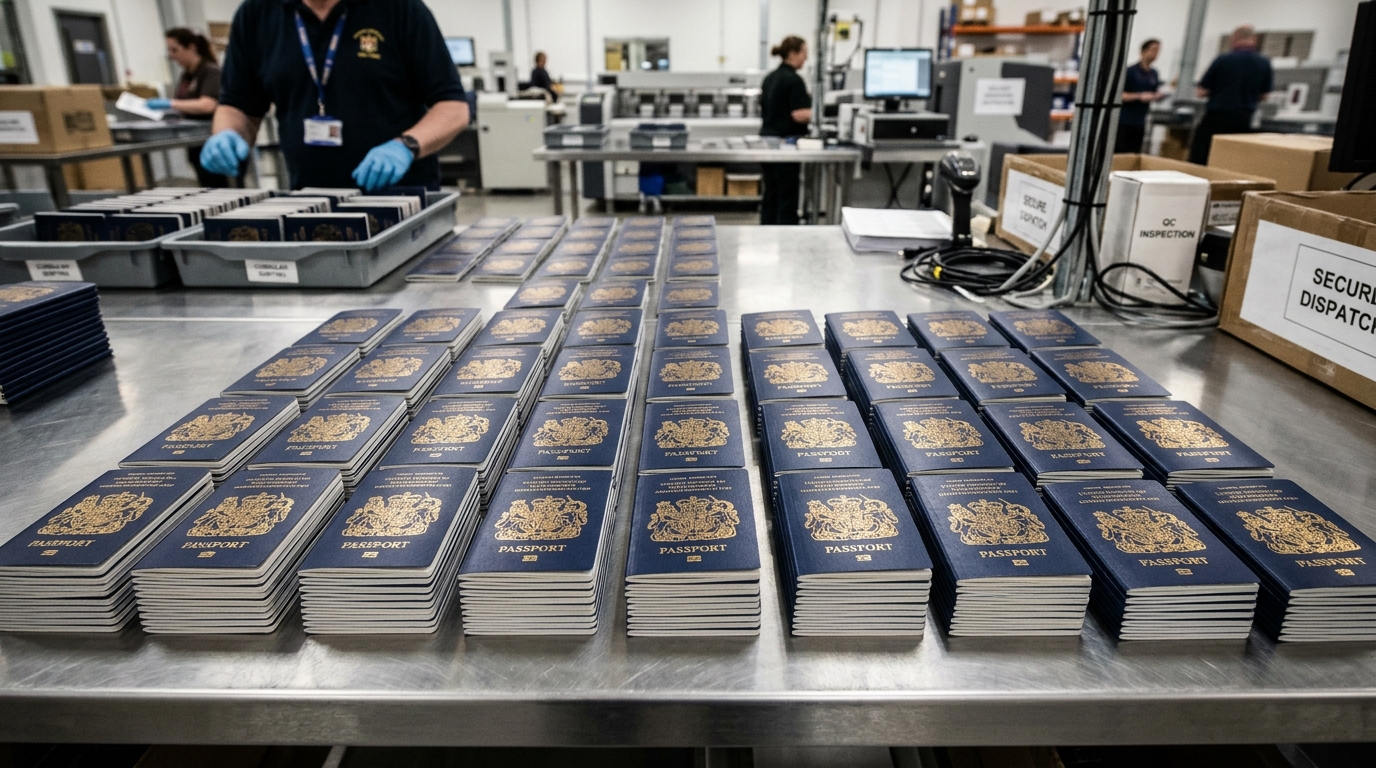
Modern passport delays are frequently driven by complex supply chain dependencies surrounding the production of the Next Generation Passport (NGP). Introduced to replace legacy paper-laminated books, the NGP incorporates high-security polycarbonate data pages, laser-engraved biometric imagery, optical variable ink, and embedded radio frequency identification (RFID) microchips manufactured to rigorous international standards (ICAO Doc 9303).
Because the physical polycarbonate layers and biometric silicon chips are sourced through specialized federal defense contractors and high-security government facilities (such as the Government Publishing Office in Washington, D.C. and regional secure production hubs), localized material shortages or machine calibration bottlenecks can trigger cascading processing slowdowns nationwide.
When national processing backlogs expand due to seasonal demand surges or booklet fabrication constraints, travelers must adopt proactive filing strategies:
The 9-Month Renewal Window: Do not wait until your passport is within 6 months of expiration. Many foreign countries (including the European Schengen Area, Singapore, and Thailand) strictly enforce the "Six-Month Validity Rule," denying entry if your passport expires in under 180 days. Initiate your renewal at least 9 months prior to expiration.
Selecting the 52-Page Large Book: When completing Form DS-11 or DS-82, always check the box requesting the "52-Page Large Book" at zero additional cost. Frequent travelers who exhaust standard 28-page books are forced to apply for an entirely new passport, as passport pages can no longer be added to existing books.
Pairing Expedited Service with Priority Express Mail: If applying during known backlog periods, combine the $60 federal expedite fee with $21.36 for 1–2 day USPS return delivery. This ensures your completed document bypasses routine second-class ground postal networks.
Daily Consular Status Auditing: Monitor your 9-digit locator number every 48 hours to detect administrative suspensions or photo rejection notices immediately rather than waiting for physical mail delivery.
Does paying the $60 expedite fee protect against booklet shortages?
Yes. Expedited applications are prioritized at the automated laser engraving centers, ensuring that available booklet inventory is allocated to priority files before routine batches are processed.
Can a traveler request a temporary emergency book if delays threaten travel?
If an international departure is within 14 calendar days, applicants can schedule an urgent in-person appointment at a regional agency where emergency credentials can be issued on-site.
7. Congressional Oversight & The Passport System Modernization Act
Following unprecedented application backlogs that reached 13 to 15 weeks during peak travel surges, the United States Congress enacted legislative reforms and conducted bipartisan oversight hearings to mandate modernizations in consular operations. Key structural reforms currently being phased into federal passport operations include:
Digital Intake Automation: Replacing manual data entry with high-throughput optical document indexing machines capable of processing 25,000 applications daily per facility.
Decentralized Production Hubs: Expanding laser-engraving production facilities beyond Portsmouth and Tucson into new regional federal manufacturing annexes to eliminate single points of failure.
Consular Workforce Augmentation: Increasing the permanent corps of Foreign Service adjudicators and authorized domestic passport specialists by over 15% to maintain adjudication velocity during seasonal travel peaks.
Real-Time SMS & Email Telemetry: Deploying automated notifications that alert applicants via text and email at every milestone (packet received, payment cashed, adjudication approved, USPS tracking assigned).
Frequent international travelers and business executives who navigate fluctuating passport processing backlogs frequently utilize the Department of State's Second Valid Passport program under 22 CFR § 51.4(b). Under federal regulations, an American citizen who travels extensively or requires multiple foreign visas simultaneously is legally eligible to hold two valid U.S. passport books concurrently.
A second valid passport is typically issued with a 4-year validity window and provides crucial protection against travel disruptions: travelers can submit one passport book to a foreign embassy for multi-week visa processing while maintaining their primary passport book in their physical possession for ongoing international departures. Applying for a second valid passport requires submitting Form DS-82 accompanied by an explanatory letter detailing your international travel itinerary and operational necessity.
9. Additional Processing Delays FAQs
Are passport renewals processed faster than first-time applications during surges?
Yes. Mail-in renewals using Form DS-82 typically move through intake scanning and adjudication 10 to 14 days faster than first-time Form DS-11 applications because the applicant's citizenship and identity have already been verified in federal consular archives.
Can severe weather at regional production facilities cause nationwide shipping delays?
Yes. Because the primary automated personalization centers are located in Portsmouth, New Hampshire and Tucson, Arizona, severe winter blizzards in the Northeast or extreme heat disruptions at Western air freight hubs can temporarily pause postal dispatch operations for several days.